Less is more: The power of precision in pest management
Look at the beaker in the image below. That tiny amount of colored liquid is all you need to protect an entire acre of grapes from vine mealybug for up to 210 days. Sounds impossible? That's the remarkable power of pheromones. Here's how it works: every insect species has its own chemical signals for attracting mates. We've figured out how to replicate those signals and use them to our advantage. When you fill your vineyard with these synthetic pheromones, male insects get completely confused—they can't find females to mate with, which means no next generation of pests.
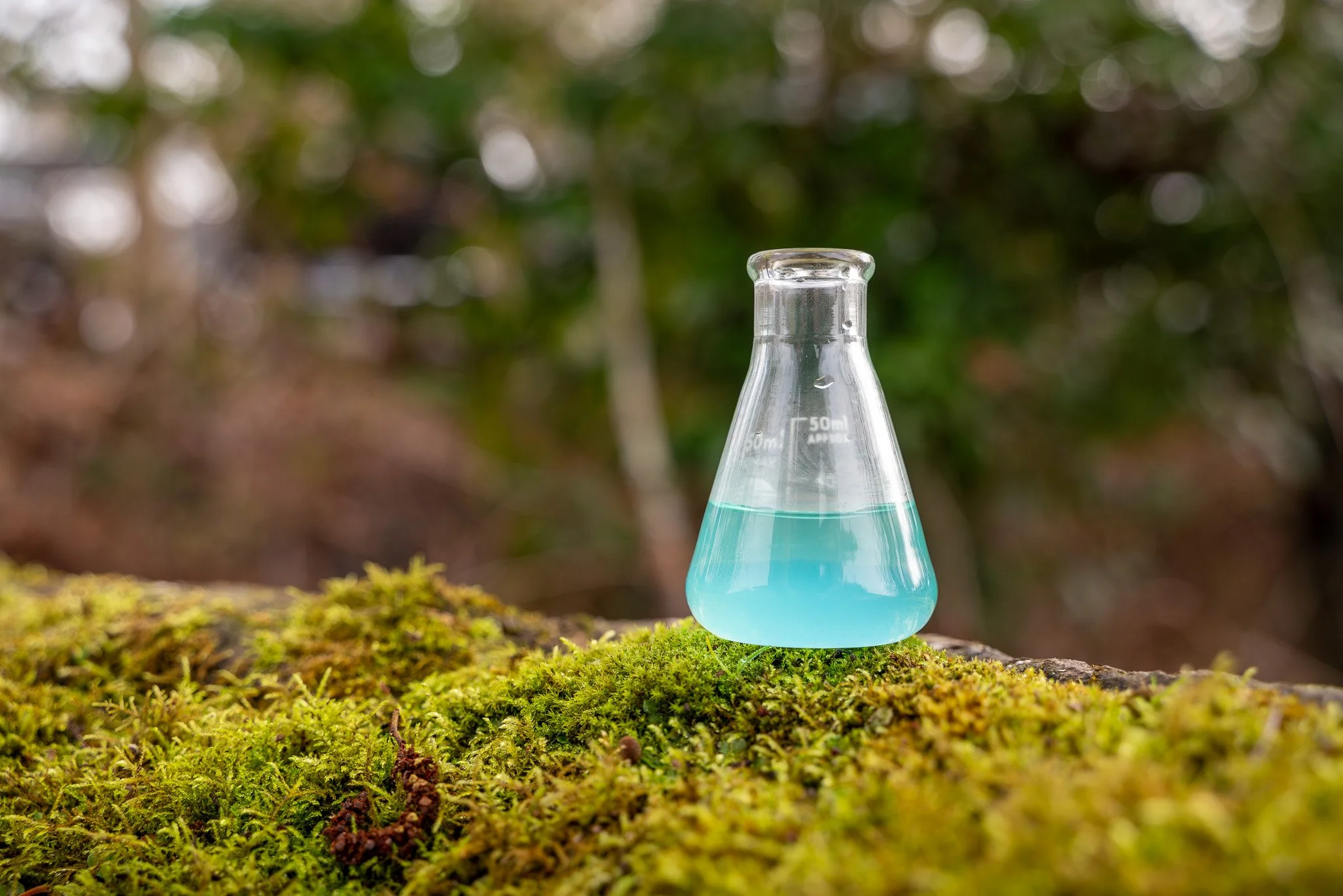
This small flask contains roughly the combined active ingredient from 200 Isomate VMB dispensers — the total amount needed to protect an entire acre of grapes from vine mealybug for up to 210 days.
For decades, growers have grappled with a fundamental question: how much is too much? We apply pesticides, hoping we've used enough to control pests but not so much that we harm the environment, beneficial insects, or our bottom line. But what if there was a way to be extraordinarily precise while being extraordinarily effective?
The power of 2 tablespoons
Let's talk about Isomate VMB for vine mealybug control in vineyards. At the highest application rate of 200 twist tie dispensers per acre, that's 1 highly attractive source—essentially a super sexy female mimic—every 30 feet competing for the males' attention. Each dispenser contains 176 milligrams of sex pheromone. That's millions of times more pheromone than a female produces and roughly 2 tablespoons of pheromone protecting an entire acre for 180-210 days!
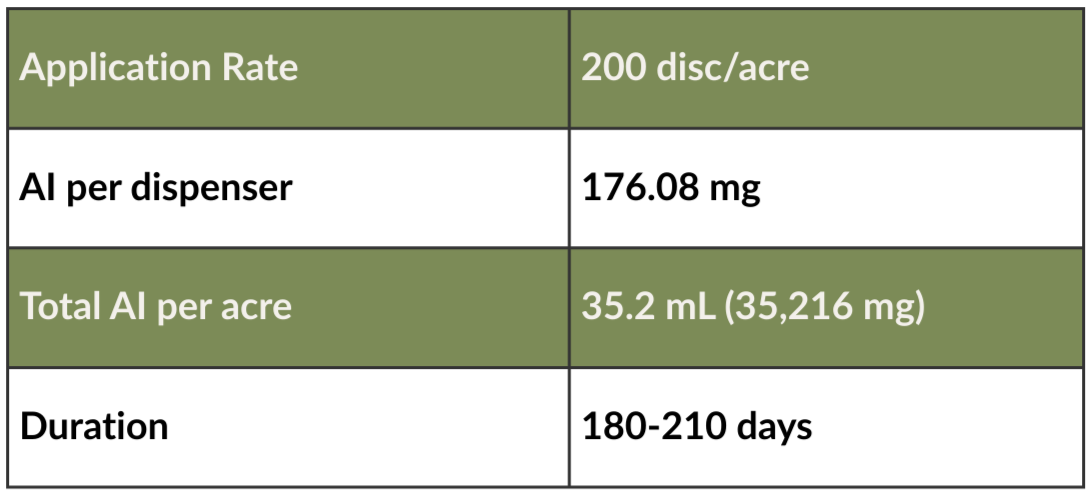
Just over 2 tablespoons of active ingredient protects a full acre for an entire growing season!
With 200 dispensers distributed throughout each acre, you create hundreds of point sources that establish an even blanket of pheromone across your entire vineyard. Each dispenser works continuously throughout the season. Every day, it releases a precisely controlled microscopic amount that works to disrupt pest mating cycles. No spray drift, no reentry intervals, no mixing equipment, no multiple applications.

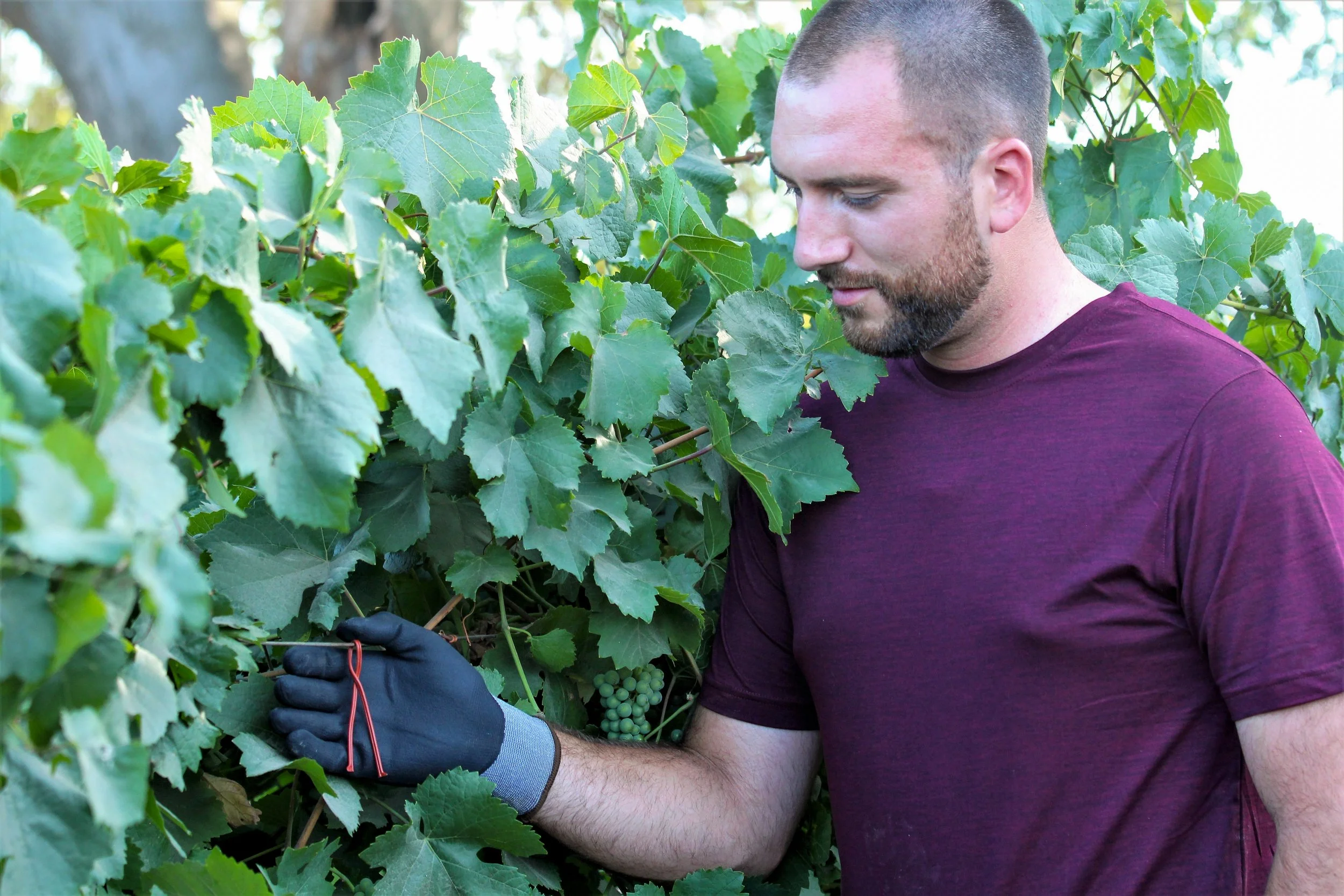
Isomate VMB passive dispenser in grapes.
Comparing Across Products
The precision of pheromone dispensers extends across different crops and pests. Let's look at another example:
Isomate OFM/PTB TT for Stone Fruit Orchards
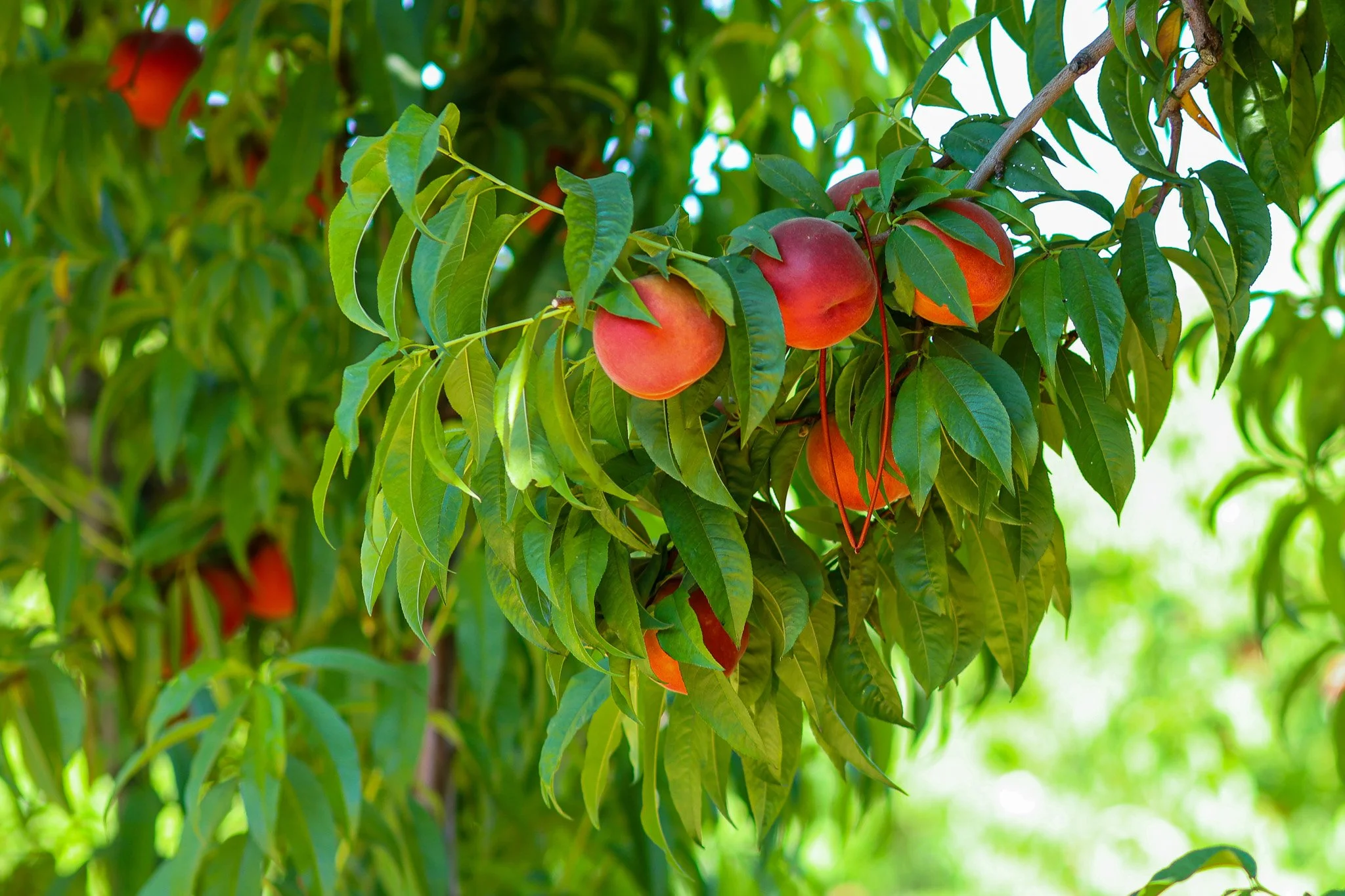
These twin-tube dispensers disrupt two major stone fruit pests—Oriental fruit moth and peach twig borer—with
one application. The high rate of application is 200 dispensers per acre, with each dispenser containing roughly 347 milligrams of sex pheromone. That's roughly 5 tablespoons protecting an entire acre for 150 days.
Notice the pattern? Whether it's VMB for vineyards or OFM/PTB for stone fruit, we're talking about remarkably small amounts of pheromone—measured in tablespoons per acre, working continuously throughout the season.
The Environmental Advantage
Synthesized pheromones work by mimicking the natural chemical signals insects use to communicate. Whether you're growing grapes, peaches, nectarines, apricots, plums, prunes, or cherries, these compounds offer remarkable benefits:
Here's the fundamental difference: pheromones work proactively to maintain pest numbers below damaging levels throughout the season, while traditional insecticides are typically applied reactively—after insects have already exceeded damage thresholds. This shift from reactive to proactive pest management changes everything:
Species-specific: They target only the pest you're trying to control, leaving beneficial insects completely unharmed. Your ladybugs, lacewings, and parasitic wasps? They go about their work uninterrupted.
Non-toxic: These aren't poisons. They're communication disruptors. There's no toxicity to soil microorganisms, earthworms, or beneficial fungi. Your vineyard and orchard ecosystem remains intact.
Residue-free: Pheromones break down naturally and leave no chemical residues on fruit, in soil, or in groundwater. Your environmental footprint? Significantly reduced.
Safe for workers: No reentry intervals. No protective equipment required for nearby workers. No spray drift concerns for neighboring properties.
Season-long protection: Unlike insecticides or sprayable pheromones that provide 14-21 days of control, passive dispensers work during and between pest flights.

Isomate OFM/PTB TT passive dispenser in peaches.
Complementary to Traditional Pest Management
It's unlikely that pheromones can completely replace traditional insecticides. Depending on the pest and pressure, you will likely still need some traditional treatments. However, pheromone mating disruption can significantly reduce the number of traditional insecticides needed over time. This reduction helps prevent insects from developing resistance to chemical pesticides—a critical benefit as resistance becomes increasingly problematic in agriculture.
Consider this: pheromone mating disruption for codling moth has been used continuously in U.S. apple orchards for over 40 years. Recent independent testing by scientists at Simon Fraser University confirmed that wild female codling moths haven't altered their pheromone chemistry, and males haven't changed their response to synthetic pheromones. Four decades of continuous use—zero resistance. By using pheromones as your primary management tool and reserving traditional insecticides for when truly needed, you're protecting both your crop and the long-term effectiveness of your pest management arsenal.
The bottom line
Pheromones have great benefits and complement traditional spray programs. They can reduce overall inputs (sprays, cost, risk) while increasing outputs (quality produce, profits). Many independent academic studies show that the third year of pheromone use is when growers reach the maximum benefit, as pest populations are reduced so low that they rarely increase to threatening levels. In agriculture, we're often told nontraditional methods are less effective or increase growers’ risk of failure. Pheromone technology turns that assumption on its head. Sometimes the most powerful solution is also the smallest, the most targeted, and the gentlest on the environment.
Next time you're evaluating pest management options for your vineyard or orchard, ask yourself: How much active ingredient am I really putting into my farm? And what is that ingredient doing to my ecosystem?
That beaker of colored water tells a powerful story. Just 35 milliliters—barely more than two tablespoons—protects an entire acre for up to 200 days.
That's precision. That's effective. That's sustainable pest management.
Note: Isomate VMB has a variable rate of 120-200 dispensers per acre. Talk to your PCA or PBC Rep for what would work best for your vineyard.